
| "Ice in a Savory Soup?!" The Unique Science Behind Korea’s One-of-a-Kind 'Ice-Cold' Summer Noodles 2026-07-14 |
|---|
|
As the second week of July arrives and the midsummer heat intensifies, there is nothing quite like sitting under a cool air conditioner and downing a bowl of ice-cold noodle soup. Whether it is the tangy, slushy broth of Mul-Naengmyeon (cold buckwheat noodles) or the creamy, rich, and icy draft of Kongguksu (soy milk noodles), these dishes represent the ultimate summer bliss in Korea. But did you know that one of the most shocking—and ultimately beloved—discoveries for international foodies visiting Korea is the practice of putting actual ice cubes and slush directly into a savory meal? While most cultures enjoy cold dishes, Korea has elevated "ice-cold dining" into a high art form. Let’s dive into how global summer dishes compare to Korea’s unique chilly noodle culture.
1. Chilled Dishes Around the World: "Isn't Ice Only for Drinks?" To understand why Korean cold noodles are so revolutionary, we first have to look at how other food cultures define a "cold dish." Usually, it means "chilled to cellar temperature," not "packed with literal ice." Spain's Gazpacho & France's Vichyssoise: During the scorching Mediterranean summer, Europeans love cold soups. Spain has Gazpacho—a refreshing, raw purée of tomatoes, cucumbers, and olive oil. France has Vichyssoise—a velvety soup made from puréed leeks, potatoes, and heavy cream. Both are served chilled straight from the fridge (around $5^\circ\text{C}$), but you will almost never see ice cubes floating in them.
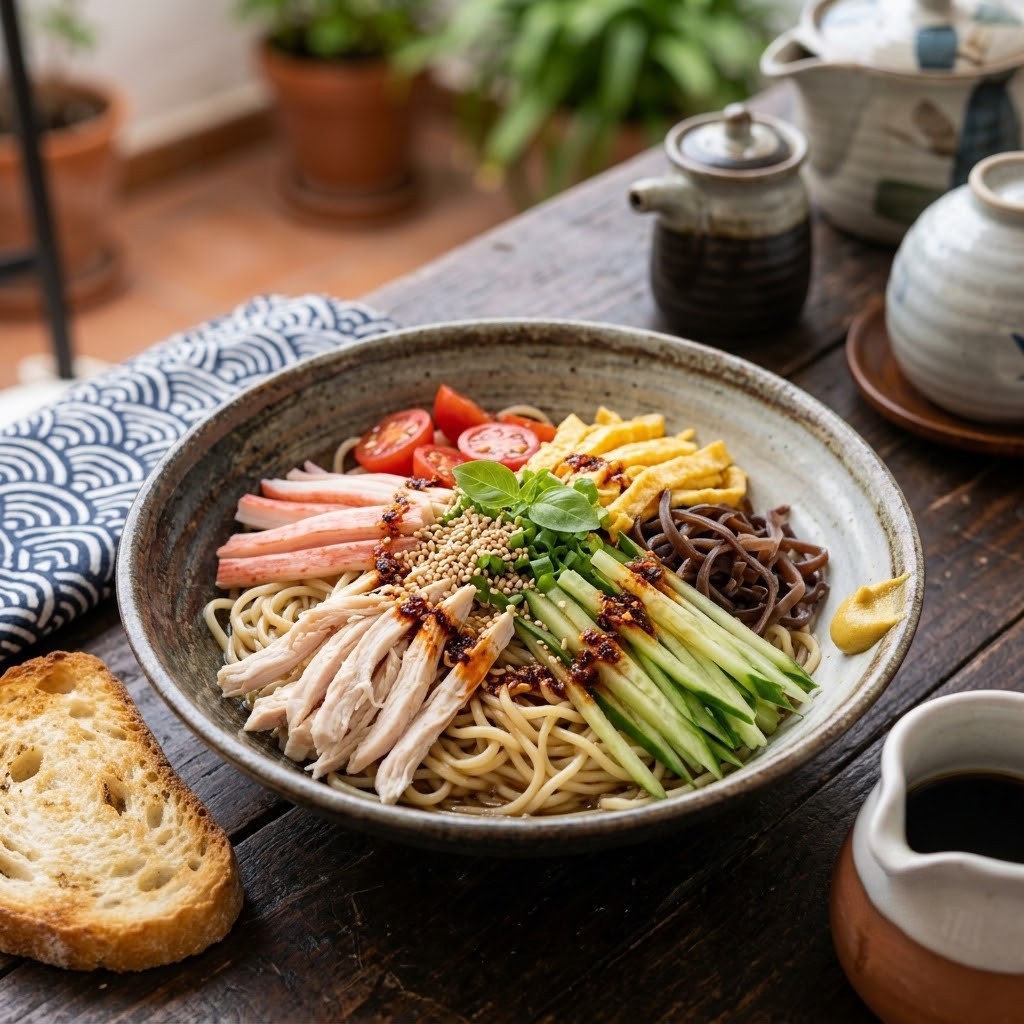
Japan's Hiyashi Chuka: In neighboring Japan, Hiyashi Chuka (chilled Chinese-style noodles) is a summer staple. Cold wheat noodles are topped with colorful julienned egg, cucumber, and ham, drizzled with a refreshing soy-sesame dressing. While cool and delightful, it is still a dry, dressed noodle dish rather than a deep bowl of frozen broth.
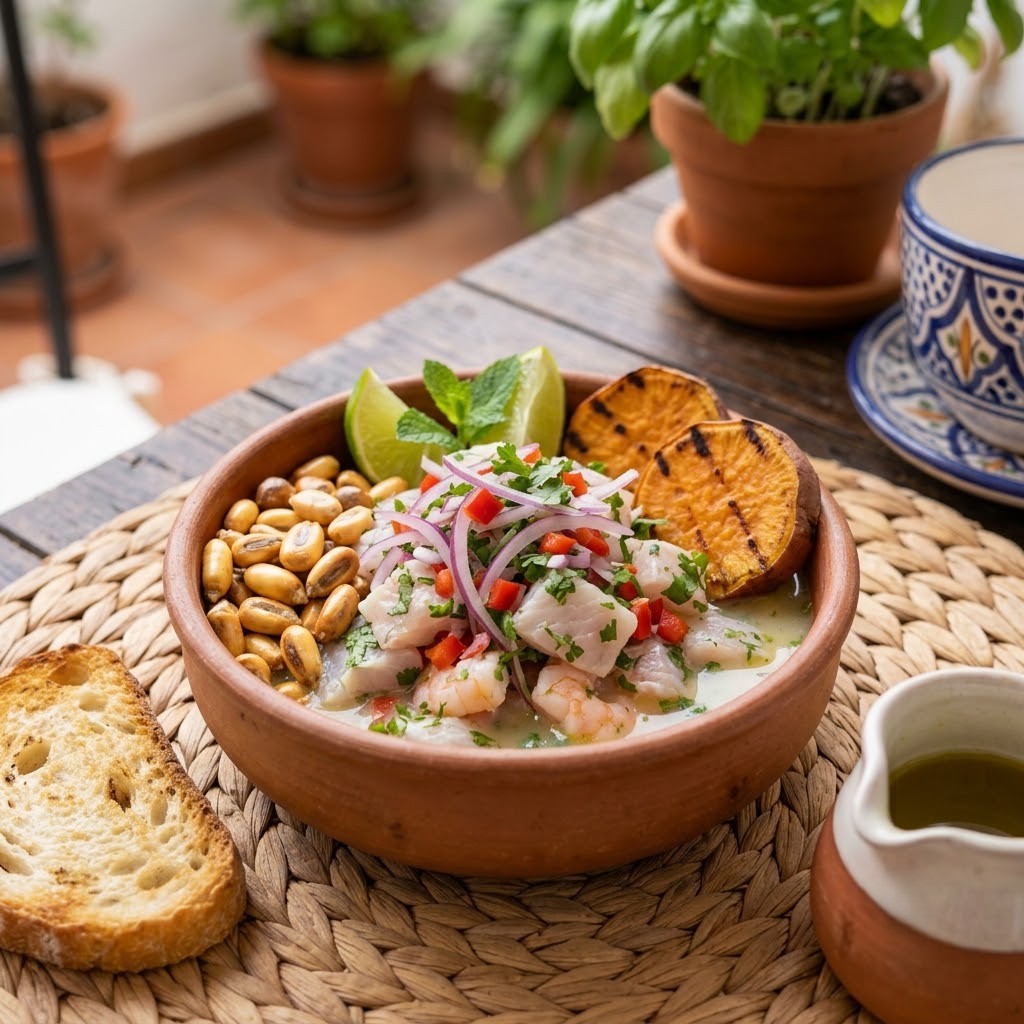
Latin America's Ceviche: Across Peru and coastal Latin America, Ceviche cures the heat with fresh raw seafood cured in sharp citrus juices (lime and lemon). It is served cold, but it acts primarily as a vibrant, tangy appetizer to wake up the palate.
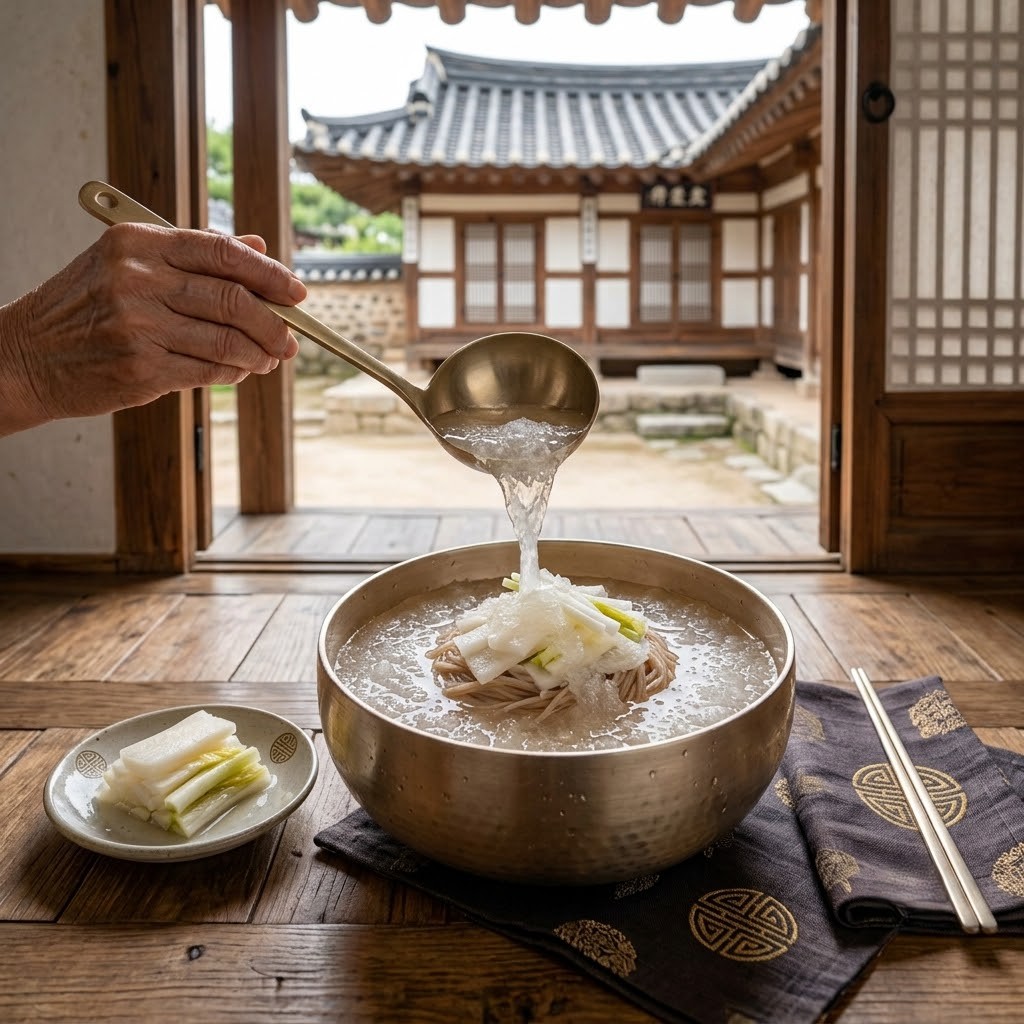
2. The Big Three of Korean Ice-Noodles: Cold, Crispy, and Scientifically Built Korean cuisine leverages freezing temperatures to completely alter the texture and chemistry of summer foods. The Art of the Slush: Mul-Naengmyeon & Dongchimi-guksu The Magic: The savory beef broth or tangy Dongchimi (water radish kimchi) juice is frozen until it reaches a delicate, snowy slush consistency. The Science: This extreme cold instantly constricts the starch or buckwheat noodles, giving them an incredibly bouncy, chewy texture (K-crunch). It also preserves the sharp, volatile aromatics of vinegar and mustard, delivering a crisp punch to the palate.
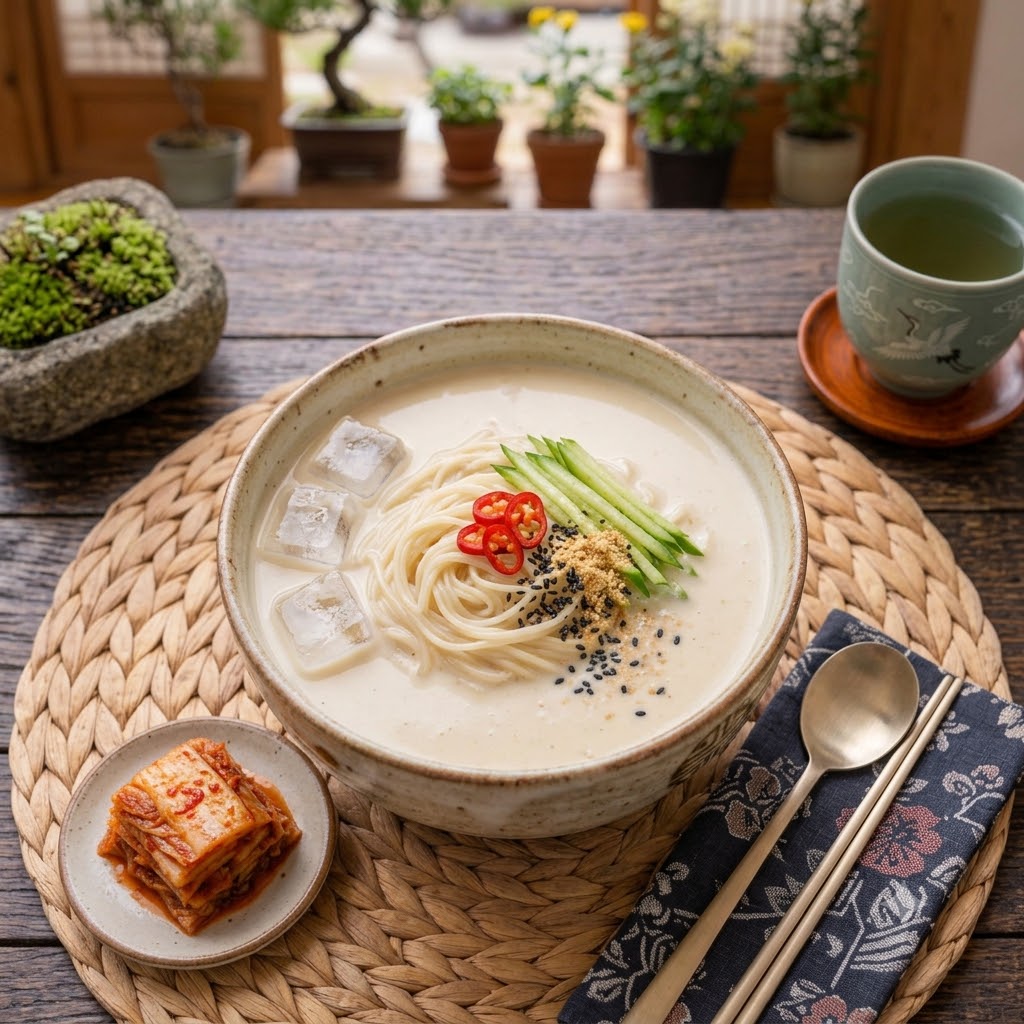
Rich, Creamy, and Frozen: Kongguksu The Magic: Freshly boiled soybeans are ground into an ultra-thick, velvety milk, served over noodles with floating ice cubes. The Science: Historically a crucial protein-replenisher for working farmers, the ice cubes gradually melt into the dense soy broth. This thins it out just enough to keep it drinking-smooth while maintaining an icy-cold temperature that masks any heavy bean odors.
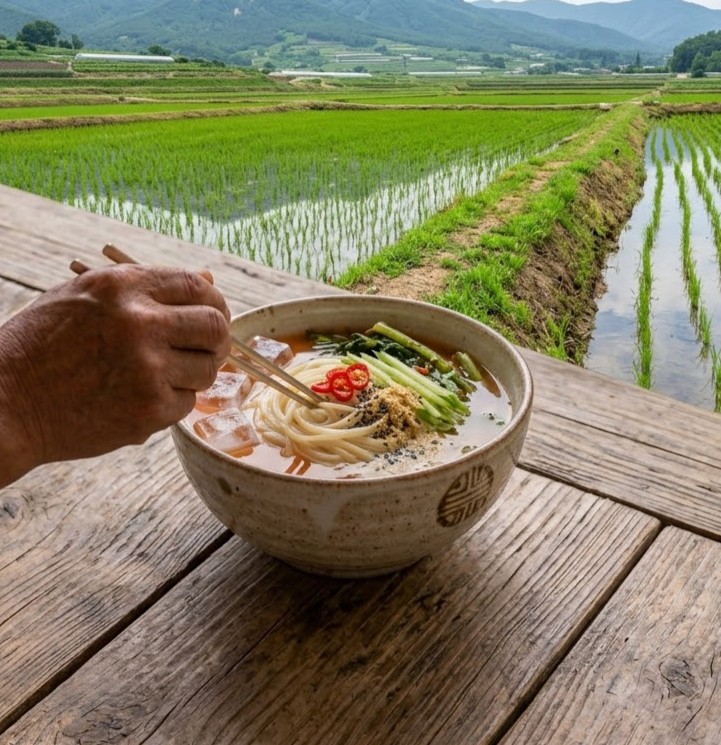
The Sweet, Sour, and Carbonated Kick: Yeolmu-guksu The Magic: Tart, naturally fermented young summer radish kimchi (Yeolmu) is mixed with cold broth and wheat noodles. The Science: The natural organic acids and carbonation produced during fermentation are amplified by the ice, creating a throat-tingling, sparkling sensation that instantly revives a heat-dulled appetite.
While these ice-cold noodle dishes are a masterclass in summer culinary engineering, they all share one crucial, traditional partner that keeps the meal healthy: Korean White Radish (k-mu).Eating extremely cold foods can sometimes shock a sensitive digestive tract. To counter this, Koreans have always topped cold noodles with slices of pickled radish or served them alongside Dongchimi. Packed with natural digestive enzymes like amylase, 'k-mu' naturally protects the stomach and ensures smooth digestion, proving that our ancestors' summer traditions were backed by delicious science.This July, as the heat peaks, why not skip the usual iced coffee and refresh your body from the inside out with a bowl of authentic Korean cold noodles? |
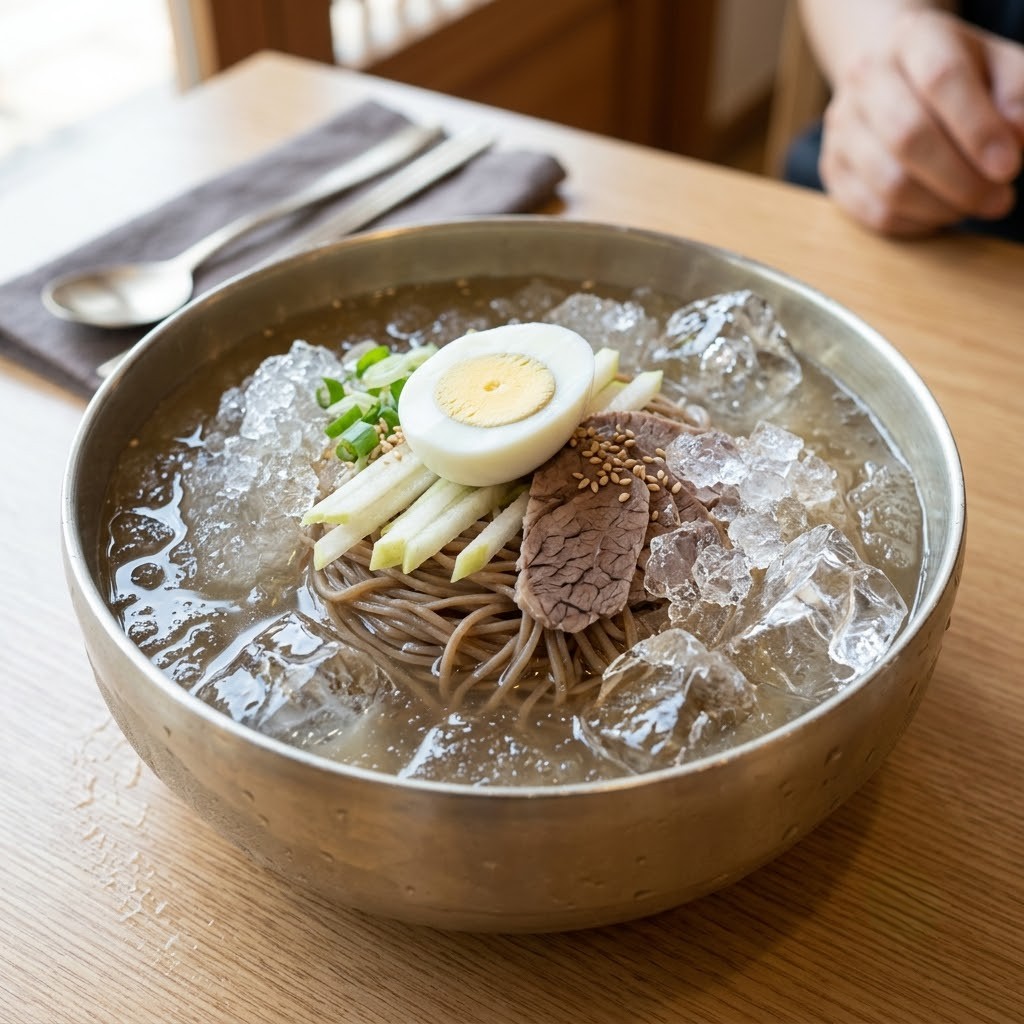

 While the rest of the world enjoys dishes that are "cool enough not to break a sweat," Korea took a wild leap forward: creating main courses designed to stay at a freezing 0 using actual ice.