
| Before the Chili Pepper Kimchi: The Ancient 'White Kimchi' Born from Frozen Clay Jars and Winter Science 2026-07-22 |
|---|
|
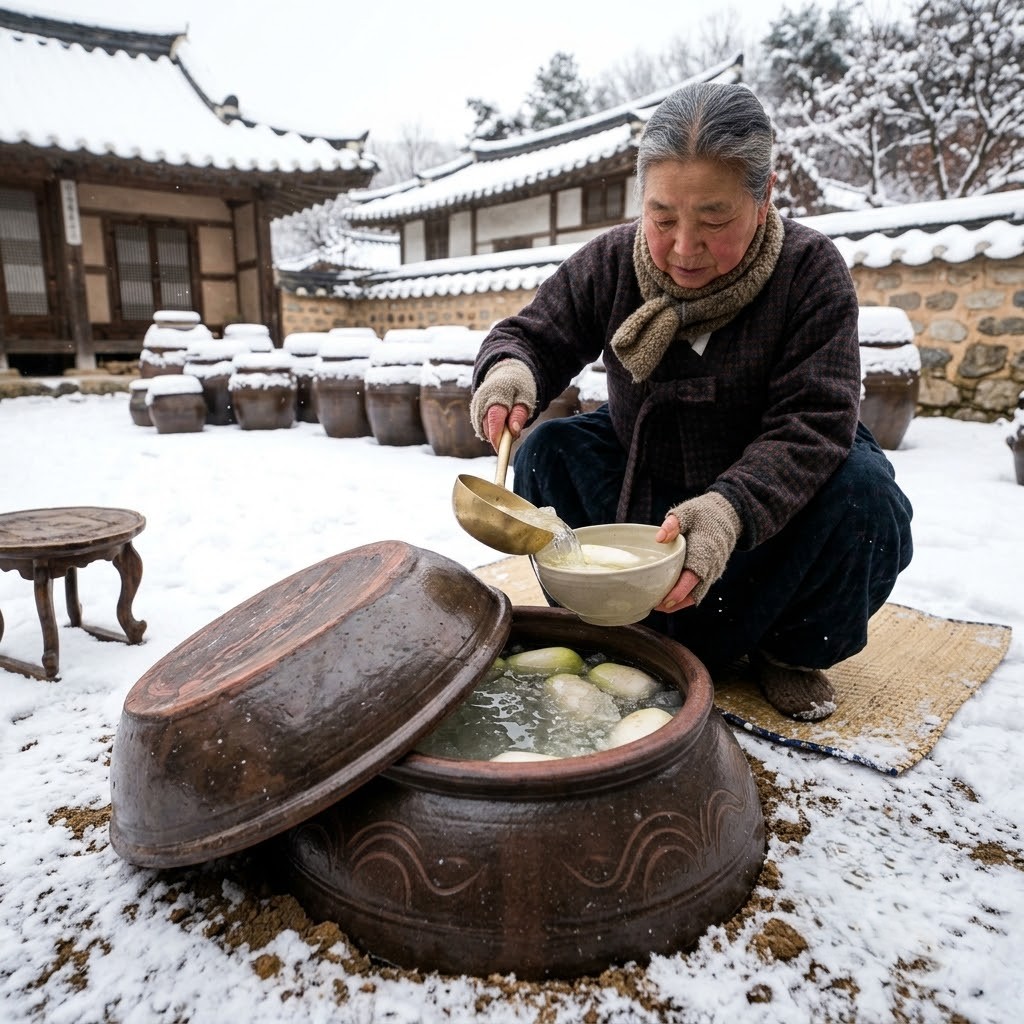
When people around the world think of Korean Kimchi, they almost always imagine the iconic, fiery-red cabbage version slathered in spicy chili flakes (Gochugaru).However, ask any Korean about their fondest childhood food memories, and they will likely tell you a very warm, nostalgic story: a snowy winter day, a grandmother walking out to the backyard, sweeping the thick blanket of snow off a traditional earthenware jar (Onggi) buried deep in the frozen ground, and scooping out a bowl of crystal-clear brine with whole, chilled radishes floating inside.This is Dongchimi (동치미)—a sparkling, white radish water kimchi. Long before red chili peppers arrived in Korea, this ancient "White Kimchi" was the truest archetype of Korean fermentation.How does a simple combination of dense Korean white radish k-mu and salted water create a beverage so effervescent that it literally tingles down your throat like natural soda? Let’s explore the rich history and fascinating science behind Dongchimi. 1. A Culinary Time Machine: The Archetype of Korean Kimchi To understand Dongchimi, we have to look back at the origins of Korean food history. Life Before the Red Pepper: Red chili peppers were introduced to the Korean peninsula in the late 0 to early 17via maritime trade. Before then, traditional Korean Kimchi was neither spicy nor red. It consisted of root vegetables steeped in seasoned brine—making Dongchimi the truest ancestor of modern Kimchi. Etymology of Winter Preservation: The name Dongchimi originates from the Sino-Korean words Dong (冬, winter) and Chimchae (沈菜, vegetables soaked in brine). Over centuries, Dong-chim naturally evolved into Dongchimi—translating directly to "Winter Salted Vegetable." The Ancestral Oasis: During harsh Korean winters when fresh green produce was impossible to cultivate, these buried earthenware jars served as a vital source of nutrients, hydration, and natural digestive enzymes.
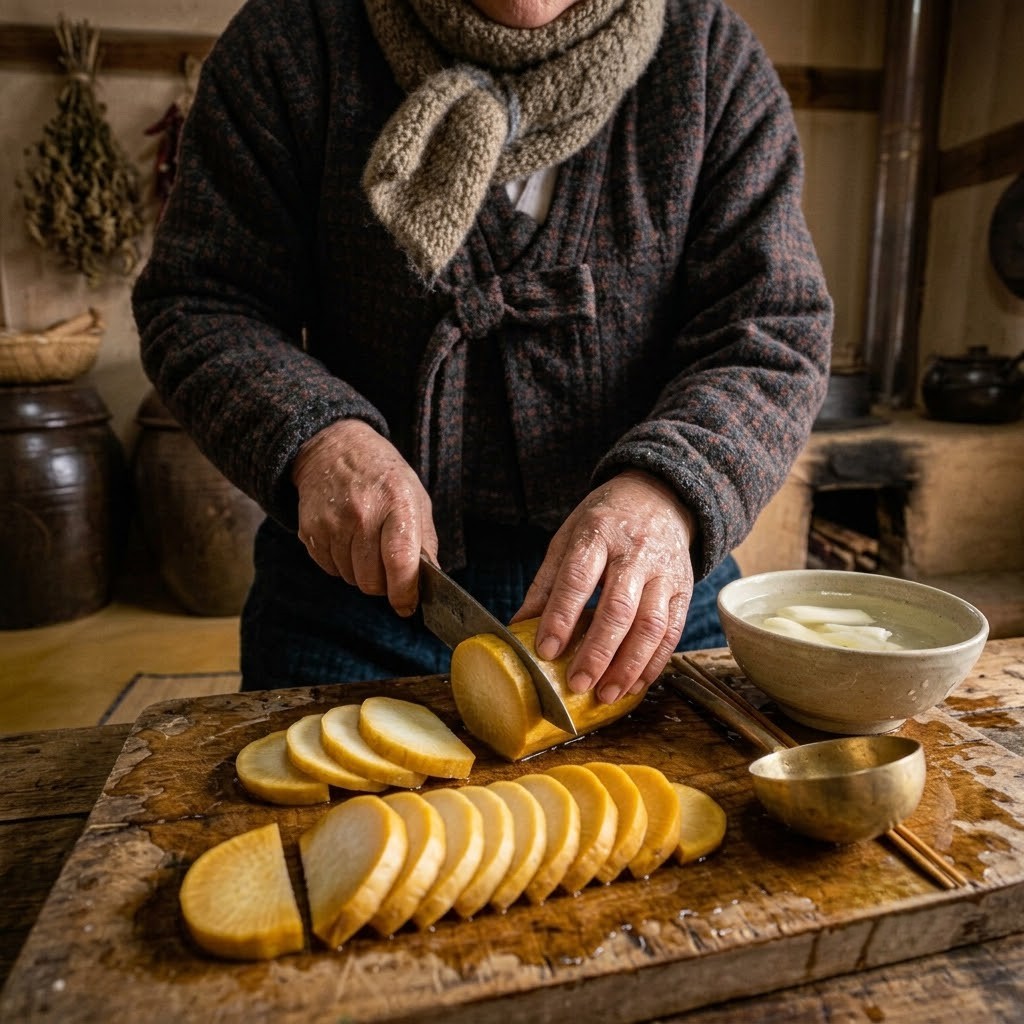
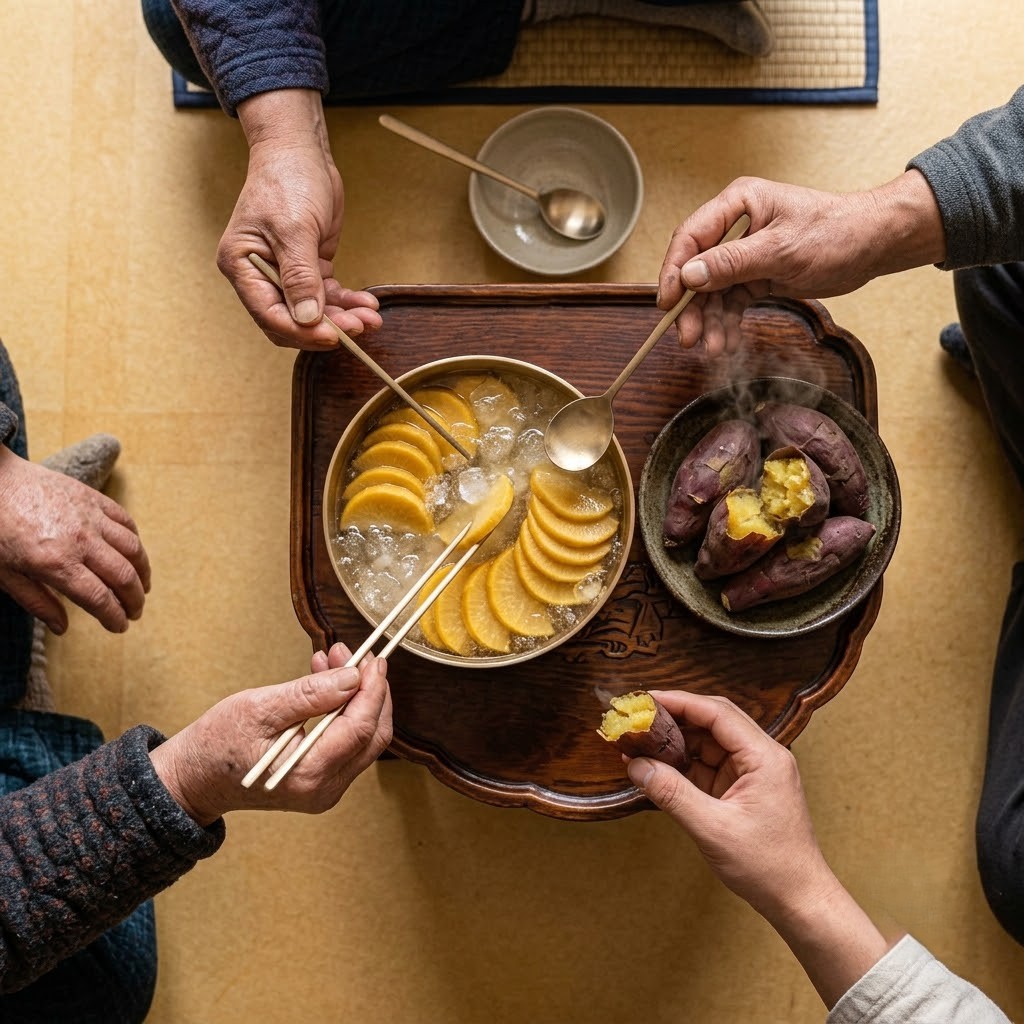
2. The Cold Science: Why Does Dongchimi Taste Like Sparkling Water? Anyone who tastes authentic Dongchimi is shocked by its sharp, mouth-tingling carbonation. This isn't artificially added gas—it is a masterpiece of low-temperature microbiology. [The Chemistry of Dongchimi Effervescence] Korean White Radish (k-mu) + Salted Brine └─> Buried Underground in Onggi Jars (Sustained at 0°C ~ 4°C) └─> Proliferation of Leuconostoc Bacteria └─> Natural CO₂ Gas Produced & Dissolved into Cold Liquid └─> Sparkling, Gut-Healthy Natural Carbonation! The '0' Snow Effect: When an Onggi jar is buried $80\%$ underground beneath the snow, the interior maintains a rock-steady temperature between 0 and 4. Natural CO_2 Trapping: At these near-freezing temperatures, beneficial lactic acid bacteria—specifically Leuconostoc mesenteroides—slowly feed on the natural sugars of the radish, releasing carbon dioxide CO_2. Because gas dissolves vastly better in cold liquids under pressure, the brine absorbs the CO_2, transforming the soup into a naturally fizzy, probiotic drink. The High-Density k-mu Advantage: As the radish ferments over months, its outer skin transforms into a golden, translucent hue while maintaining a firm, white interior. High-density k-mu retains its structural cell walls even when soaked in brine, delivering an unbeatable, crisp snap (K-crunch). Nature’s Original Antacid: Dongchimi brine is naturally rich in diastase and amylase—enzymes that break down complex starches. This is why Koreans traditionally served icy Dongchimi alongside piping-hot, dense steamed sweet potatoes to instantly aid digestion.
3. The Next Global Fermentation Trend: White Kimchi for Gut Health Today, while Dongchimi is rooted in winter heritage, its sparkling acidity makes it an absolute hero during summer as well—served cold over noodles (Dongchimi-guksu) or used as a refreshing broth base. As global foodies shift toward plant-based dining, clean-label ingredients, and gut-healthy probiotics (such as Kombucha or Kefir), Dongchimi stands out as a sophisticated, non-spicy Korean superfood. It offers all the live probiotic benefits of traditional Kimchi with a clean, ultra-refreshing taste profile that appeals to palates worldwide.
Sourcing Premium High-Density k-mu Across North America Craft your own authentic, sparkling Dongchimi or elevate your seasonal menu with premium, sweet, and firm Korean white radishes, available at major Asian supermarkets near you:B2C Retailers: H-Mart, Zion Market, Hannam Chain, Galleria Market, 99 Ranch Market Commercial Supply & Global B2B Inquiries We supply top-tier, high-density Jeju-grown Korean white radishes k-mu to commercial Kimchi manufacturers, food processors, and wholesale distributors across North America. To secure your seasonal supply chain or request a B2B quote, please visit our website and submit a form via our 'Contact Us' page. |